VERINA: Benchmarking Verifiable Code Generation
Built a benchmark and evaluation pipeline for measuring whether generated code is actually correct and verifiable, targeting more reliable code agents.
Read arXivMachine Learning Systems • AI Research
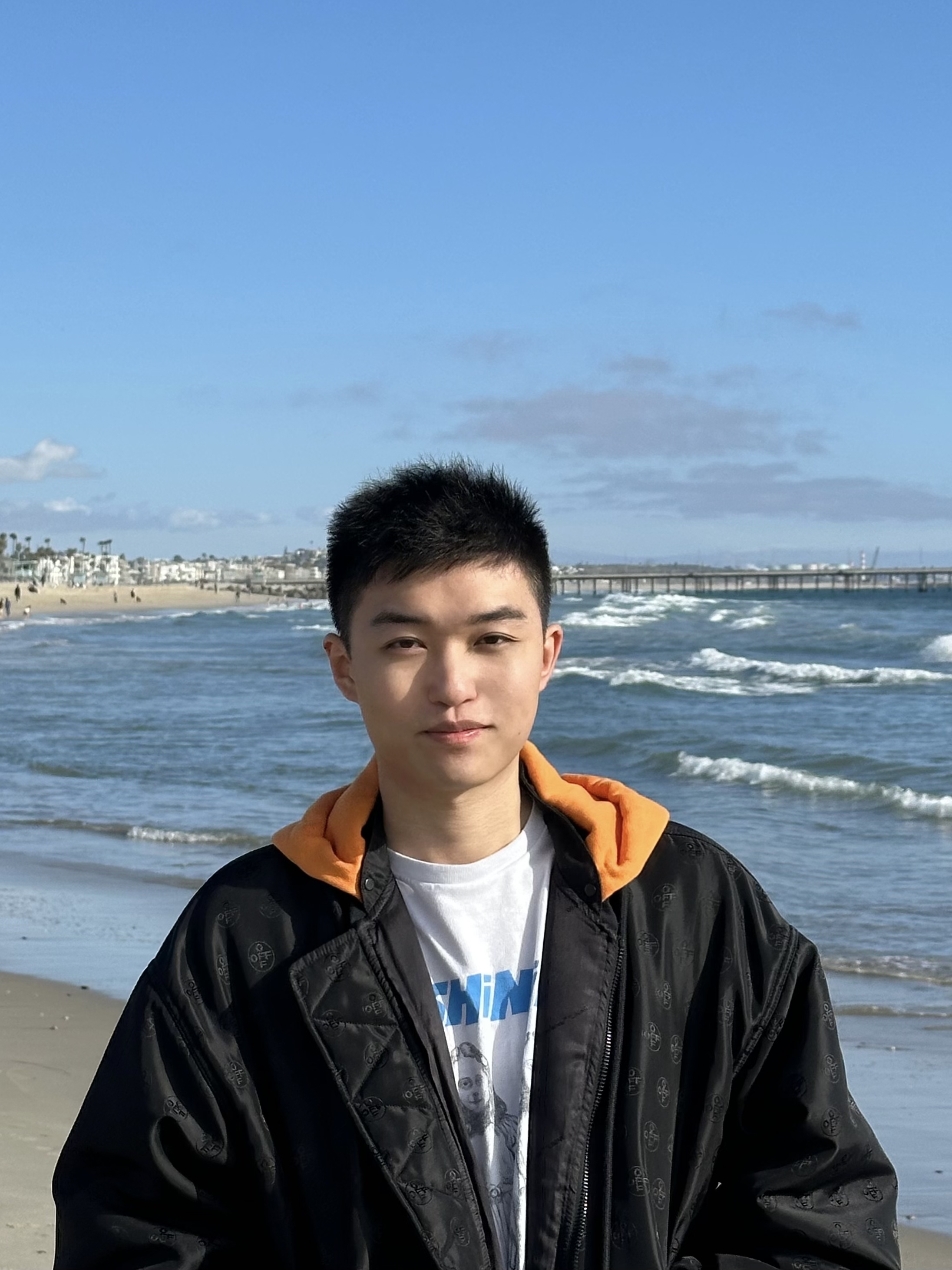
M.S. student at Stanford building feedback-driven learning systems, verifiable code benchmarks, and research pipelines for scientific discovery.
My recent work spans scalable model improvement, structured critique, diffusion transformer serving, and dataset intelligence for NLP. I’m interested in turning ambitious ML ideas into robust systems and clear empirical results.
Current Focus
Selected Work
Representative papers and projects that best capture the direction of my recent research.
Built a benchmark and evaluation pipeline for measuring whether generated code is actually correct and verifiable, targeting more reliable code agents.
Read arXivDesigned serving improvements for diffusion transformers using attention optimizations and continuous batching for efficient high-throughput generation.
Explores how to estimate conceptual novelty in AI papers by extracting and modeling structured signals from scientific content.
Read arXivCurrent Roles
Current research appointments and the systems questions they’re anchored around.
Graduate Research Assistant
Investigating feedback descent, structured critique models, and multi-round refinement pipelines for scalable model improvement.
Graduate Research Assistant
Building large-scale pipelines to extract dataset claims and structured metadata from NLP papers, with a focus on novelty and adoption signals.
Research Assistant
Led attention-system integration and batching strategy work for diffusion transformer serving, pushing toward scalable video generation systems.
ML Engineer Lead
Built automation and LLM-assisted review pipelines for infectious disease preprints in collaboration with Berkeley and UCSF researchers.
Selected Projects
A few projects outside formal publications that reflect how I build.
Integrated specialized agents, multimodal inputs, layered memory, and retrieval to push beyond standard market prediction baselines.
Extended a teaching OS across memory, scheduling, file systems, networking, and security, with a focus on systems fundamentals.
Built a secure Go client with cryptographic support for authentication, file sharing, and revocation.
Education
Stanford University
University of California, Berkeley
Selected coursework: optimization, probability for data science, security, operating systems, algorithms, computer vision, AI, machine learning, and LLM agents.